Posts

Showing posts with the label tefl

Best Grammar Books for IELTS and TOEFL Candidates
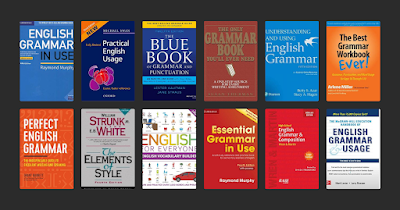
Image
When preparing for standardized English proficiency tests like IELTS or TOEFL, mastering grammar is non-negotiable. As someone who has spent years exploring the best resources, I’ve come across some exceptional grammar books that can help candidates strengthen their foundation and ace their exams. 1. "English Grammar in Use" by Raymond Murphy This book is a classic and for good reason. Tailored for intermediate learners, it’s an essential resource for anyone aiming to build a solid grammar foundation. The explanations are clear, and the exercises are practical, covering all the grammatical nuances you’ll need for IELTS or TOEFL. Each unit focuses on a specific topic and follows a structured approach, making it ideal for self-study. I personally appreciate the progression from simple to complex concepts, ensuring learners don’t feel overwhelmed. 2. "Grammar for IELTS" by Diana Hopkins and Pauline Cullen This Cambridge publication is a gem specifically designed for IE...

How to Ace Your IELTS Academic Exam: A Night-Before Guide

Image
Hello IELTS achiever, If you’re reading this the night before your exam, it means you’re ready to take on this challenge and are looking for that final boost of confidence. Let me guide you through everything you need to know and do to maximize your performance. Think of this as your last-minute mentor sharing actionable advice for every part of the test: Listening, Reading, Writing, and Speaking. Understanding the Test Format First things first, remind yourself of the test structure: Listening (30 minutes): Four sections, with 40 questions. You’ll listen to conversations and monologues. Reading (60 minutes): Three academic passages with 40 questions. Writing (60 minutes): Two tasks: describing a graph/chart/map (Task 1) and writing an essay (Task 2). Speaking (11-14 minutes): A face-to-face interview with three parts: introduction, topic discussion, and follow-ups. General Tips for Exam Success Stay Calm and Positive: Nervousness is normal, but don’t let it take over. Take deep b...

Mastering the Scanning Technique for IELTS Academic Reading

Image
 The IELTS Academic Reading test can seem daunting, especially with its strict time limit and challenging texts. However, mastering the scanning technique can make a significant difference in your performance. Scanning is a focused reading strategy that allows you to quickly locate specific information in a text without reading every word. This article will guide you through the essentials of scanning, offering practical tips to enhance your efficiency and accuracy. What is Scanning? Scanning is a speed-reading technique used to find specific details in a text, such as dates, names, numbers, or keywords. Unlike skimming, which involves quickly grasping the main ideas of a passage, scanning is about pinpointing precise information. This skill is invaluable in the IELTS Academic Reading test, where time management is crucial. Why is Scanning Important in IELTS Academic Reading? The IELTS Academic Reading test consists of three long passages and 40 questions to answer in just 60...

IELTS Band Score Calculator: Understanding How Your Scores Are Determined

When preparing for the IELTS exam, understanding the band score system is essential to set realistic goals and evaluate your performance. The IELTS Band Score Calculator simplifies the process of interpreting your test results. What Is the IELTS Band Score? The IELTS test is scored on a scale from Band 0 (Did not attempt the test) to Band 9 (Expert user). Each of the four sections— Listening, Reading, Writing, and Speaking —receives an individual band score. The overall band score is the average of these four scores, rounded to the nearest half or whole band. How to Calculate Your Overall Band Score Add the Four Section Scores : Example: Listening: 7.5 Reading: 6.5 Writing: 6.0 Speaking: 7.0 Total: 7.5 + 6.5 + 6.0 + 7.0 = 27.0 Divide by Four : 27.0 ÷ 4 = 6.75 27.0 \div 4 = 6.75 Round the Result : If the average ends in .25 or .75 , it is rounded to the nearest half band. In this case, 6.75 rounds up to Band 7.0 . Band Score Descriptions Each band reflec...

Best English Movies for Iranian English Language Learners

Watching movies in English is one of the most enjoyable and effective ways to improve your language skills. For Iranian learners, movies offer exposure to natural conversations, diverse accents, and cultural insights that textbooks simply can't provide. Choosing the right movies based on your English level is key to learning without feeling overwhelmed. Here’s a list of some of the best English movies for Iranian learners, categorized by proficiency level, along with tips on how to maximize your learning. For Beginners If you’re new to English, start with movies that have simple dialogue, clear pronunciation, and easy-to-follow plots. “Finding Nemo” (2003) An animated adventure with straightforward language and universal themes of family and perseverance. Why it’s great : The visuals help you understand the story even if you miss some words, and the vocabulary is easy to grasp. “The Jungle Book” (2016) A visually stunning film with simple, engaging dialogue. The ble...

Best English Novels for Iranian English Language Learners

Reading novels in English is one of the best ways to improve language skills, especially for Iranian learners who want to build vocabulary, understand grammar in context, and improve comprehension. However, not all novels are suitable for language learners, especially beginners. Choosing books that match your language level while keeping you engaged is key. Here’s a list of some of the best English novels for Iranian learners of different levels, along with tips on how to get the most out of your reading experience. For Beginners If you're just starting out, focus on novels with simple language and shorter sentences. “The Little Prince” by Antoine de Saint-ExupĂ©ry This classic story is simple yet meaningful. Its short sentences and straightforward vocabulary make it perfect for beginners, while its philosophical themes add depth. Why it’s great : Easy to follow and widely translated, so you can compare the English text with the Persian version for better understanding. ...

About Me: Your Trusted IELTS Expert

Hello, and welcome! My name is Amir Jahangiri , and I am an internationally recognized IELTS expert , passionate educator, and dedicated language professional based in Mashhad, Iran . With a proven track record of over 1,000 successful IELTS candidates , I have spent more than a decade (since 2009) transforming lives through English education and exam success. Credentials That Set Me Apart I hold an IELTS Academic Band 9 in all four skills , a testament to my mastery of the language and my ability to guide students to achieve their best. Beyond IELTS, I have earned multiple certifications that highlight my comprehensive expertise in English language education, including: TEFL (Teaching English as a Foreign Language) TOLIMO Duolingo English Test TOEFL (Test of English as a Foreign Language) Additionally, I hold the prestigious CPA Grade A , further solidifying my commitment to academic and professional excellence. My academic background includes: A Bachelor’s degree in English Transla...

The Difference Between English Language and English Literature

When discussing English as a subject of study, two primary branches emerge: English Language and English Literature . While they are interconnected, they have distinct areas of focus, methodologies, and applications. Understanding their differences can help students and enthusiasts choose the path that aligns with their interests and career goals. 1. What is English Language? English Language is the study of the structure, history, and use of the English language. It delves into how language functions as a system of communication. Focus Areas : Grammar and Syntax : Understanding sentence structures and rules. Phonetics and Phonology : Analyzing sounds and pronunciation. Semantics and Pragmatics : Exploring meaning and context in communication. Sociolinguistics : Examining how language varies based on factors like region, class, and ethnicity. History of English : Studying its evolution from Old English to Modern English. Approach : English Language is analytical and de...

The Benefits of Learning English for Non-Native Speakers: A Focus on Iranian

 In today’s interconnected world, learning English has become a key skill that transcends borders. For individuals in non-English-speaking countries like Iran, Japan, Iraq, and Pakistan, mastering English is no longer just an academic achievement—it’s a gateway to global opportunities. Particularly in Iran, where socio-economic development and international integration are highly valued, learning English offers transformative benefits that shape personal, professional, and cultural experiences. 1. Global Communication English is the lingua franca of the modern world, spoken by over 1.5 billion people globally. For Iranians, English provides the ability to communicate with people from diverse backgrounds, whether through social media, professional networks, or travel. This enhanced communication fosters cultural exchange and mutual understanding. 2. Access to Quality Education One of the primary motivations for Iranians to learn English is access to world-class education. Presti...

The Mirror Listening Technique: A Powerful Tool for Effective Communication

In the world of communication, truly understanding someone is one of the keys to building strong connections. One method gaining recognition for improving interpersonal interactions is the Mirror Listening Technique . This simple yet effective approach helps people not only hear words but also feel understood on a deeper level. What is Mirror Listening? Mirror Listening is a communication technique where you reflect back to the speaker what they’ve said, using their own words or paraphrasing. It’s like holding up a mirror to their emotions and thoughts. This technique goes beyond just repeating what’s said; it involves carefully listening, acknowledging, and expressing empathy for what’s being shared. By mirroring the content and tone of their message, you show you’re actively engaged and present in the conversation. Why Mirror Listening Works Builds Trust and Rapport When people feel truly heard, trust naturally follows. The mirror technique shows the speaker that you care, fos...